
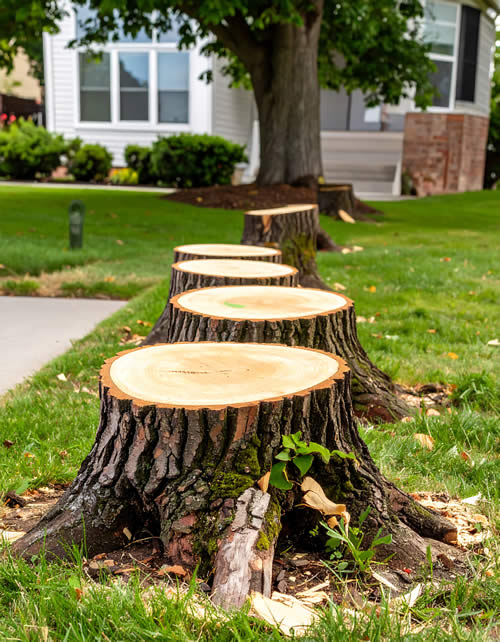
Tree Service in Hamilton, OH
Gregory Lester has spent more than 65 years climbing into trees, diagnosing what is wrong with them, and deciding what they actually need. That is what a certified arborist does, and it is different from what a tree cutting crew does. A crew shows up to cut. Greg shows up to look first. Some trees need a trim. Some need treatment for an infestation. Some genuinely need to come down before they fail on their own. The point is that the decision gets made by someone who knows the difference, not by whoever is fastest with a chainsaw and looking to fill the truck.
Hamilton’s tree canopy tells the story of the city itself. Walk through Rossville or German Village and you are standing under trees that have been growing since before most of the houses around them were renovated. Dayton Lane and Lindenwald are full of homes built before 1939, and the trees lining those streets were often planted around the same time.
That kind of age brings real character to a property, but it also means decades of accumulated stress: old storm damage that never fully healed, roots competing with sidewalks poured long after the tree was already established, and limbs that have grown heavier every year without anyone checking what is holding them up. Newer parts of Hamilton, including the subdivisions near Millikin, face a different set of questions entirely, mostly centered on getting young trees established correctly the first time.
Tree Services in Hamilton, OH
Why Hamilton Property Owners Call Tree Health Surgeons
There are two situations that account for most of the calls Greg receives in Hamilton.
Storms and Hazard Trees
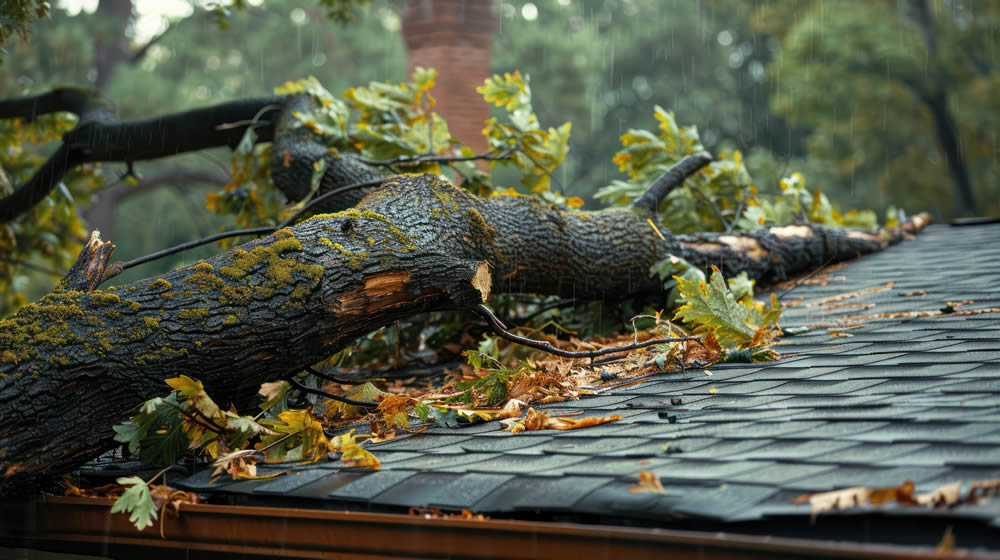
Hamilton gets hit with serious thunderstorms in the spring and summer, and ice in the winter that can snap branches without much warning. The City of Hamilton’s own data shows storms are one of the leading causes of power outages here, and once the storm passes, the city is not coming to clear debris off private property. That job falls to the homeowner, which is exactly why having someone to call matters before the storm, not during it.
Silver maples and Bradford pears cause the most trouble after bad weather in this area. Both grow fast, which sounds like a good thing until you realize fast growth usually means weaker wood and branch unions that were never built to hold up under ice. A split trunk or a limb hanging over a driveway is not something to leave alone until it falls on its own schedule.
Tree Health Surgeons answers emergency calls in Hamilton at any hour. If something comes down tonight, that call gets picked up tonight.
Old Trees Outgrowing Old Houses
In Hamilton’s historic neighborhoods, plenty of trees were planted when the home next to them was brand new, sometime in the early 1900s. A hundred years later, that tree might be sixty or seventy feet tall with branches resting against the roofline or tangled near power lines. A lot of homeowners in Rossville, German Village, and Lindenwald have looked at a tree like this for years without knowing whether it is fine or whether it is quietly becoming a problem.
Size alone does not make a tree dangerous, but it does raise the stakes when something is wrong inside it. Decay that started from an old wound, roots disturbed by utility work decades ago, or stress built up from one too many storms can all weaken a tree from the inside while the outside looks fine. If branches are scraping gutters, if there are cracks running up the trunk, or if roots are pushing up the driveway, that tree is worth a professional look before the next windstorm makes the decision for you.
Wondering whether a tree on your property needs to come down or just needs attention?
Reach Greg directly at (513) 441 9683 for an in person look, no cost involved.
Tree Services Available in Hamilton, OH
Every job Tree Health Surgeons completes in Hamilton runs through Gregory Lester, a certified arborist with more than six decades of field work behind him.
TREE REMOVAL
Careful, safe removal for hazardous, dead, or unwanted trees, including the larger jobs that come up near older homes with limited access in neighborhoods like Rossville. Learn more about our professional tree removal services.
24 HOUR EMERGENCY TREE SERVICE
A fallen tree does not check the clock before it falls, so this service does not check it either. Our 24-hour emergency tree services are available whenever storm damage strikes.
TREE TRIMMING
Thinning, deadwood removal, and structural pruning aimed at keeping large, mature trees stable through Hamilton’s storm seasons with our professional tree trimming services.
TREE AND SHRUB PEST CONTROL
Diagnosis and treatment for insect activity, including Emerald Ash Borer, with our tree and shrub pest control services.
STUMP REMOVAL AND GRINDING
Complete stump removal after tree removal to prepare your property for new landscaping with our stump removal and grinding services.
TREE PLANTING AND TRANSPLANTING
Species selection and installation matched to Hamilton’s soil conditions with our tree planting and transplanting services.
SOIL ANALYSIS AND FERTILIZATION
Root zone evaluation to address compacted soil and improve long-term tree health through our soil analysis and fertilization services.
TREE DISEASE DIAGNOSIS AND TREATMENT
Identification and treatment for regional diseases, including Thousand Cankers Disease, using our tree disease diagnosis and treatment services.
TREE PRESERVATION AND HEALTH DIAGNOSTICS
Comprehensive evaluations designed to detect structural weakness and disease before removal becomes necessary through our tree preservation and health diagnostics services.
TREE CABLING AND STRUCTURAL SUPPORT
Support weak branch unions and multi-stem trees with our professional tree cabling services, helping preserve mature trees safely.
ORNAMENTAL PRUNING
Maintain the appearance and health of landscape trees in Hamilton’s historic neighborhoods with our ornamental pruning services.
What Is Affecting Trees in the Hamilton Area
A few specific threats show up again and again in Hamilton’s tree population.
Emerald Ash Borer
This insect has spread across Ohio with nothing in the local ecosystem to stop it. It feeds underneath the bark of ash trees, cutting off the tree’s ability to move water and nutrients through its system. An infected tree can still look fine for a year or two before it suddenly is not, and once the decline becomes visible from the ground, treatment options are often limited. Because of this, Butler County restricts moving hardwood materials like firewood and logs, an effort to slow the pest from spreading further. If there are ash trees on a Hamilton property, getting one looked at before symptoms show is the better move.
Thousand Cankers Disease
Black walnut trees are the primary target of this disease, already present in Butler County according to state pest records. A fungus carried by the walnut twig beetle is responsible, and the early warning signs are subtle: a thinning crown, leaves that wilt or yellow out of season, and limbs that die back without an obvious cause. Because the disease spreads through repeated beetle activity rather than a single event, catching it early changes the outcome.
Accumulated Storm Stress in Mature Trees
A lot of Hamilton’s oldest trees, especially the ones lining streets in Lindenwald and Dayton Lane, are carrying damage that built up slowly over decades rather than from any single storm. Old pruning cuts that never closed properly, soil compacted by nearby sidewalks and driveways, and minor storm injuries that were never addressed all add up. None of it is visible at a glance, but it steadily reduces a tree’s ability to hold up the next time conditions turn severe.
How the Process Works
Step 1
In Person Evaluation, No Charge
Greg comes to the property and looks at the tree directly: trunk, root zone, canopy, and anything around it that could affect the work. No estimate gets made over the phone.
Step 2
A Clear Explanation
Once the evaluation is done, Greg explains what is actually going on and what it will take to fix it. If the tree can be saved through pruning or treatment, that gets said plainly. If removal is the only safe path forward, that gets explained too, along with the reasoning behind it.
Step 3
Work Gets Scheduled
Routine work gets scheduled around the homeowner’s timeline. Emergencies do not wait in line behind routine work; storm damage and hazardous trees get handled the same day whenever possible.
Step 4
Full Cleanup
When the work wraps up, the crew clears everything from the site: cut wood, loose branches, and wood chips, down to the last pile. Stump grinding is available for anyone who wants the area completely cleared rather than left with a stump in the yard.
What Sets Tree Health Surgeons Apart in Hamilton
- A Certified Arborist Runs Every Job
Gregory Lester’s certification and 65 plus years of fieldwork stand behind every property he visits in Hamilton. - Preservation Comes Before Removal
A tree that looks like a removal candidate is often a tree that can still be saved through the right pruning, treatment, or support. - No Padding the Job
If a tree is fine or just needs minor attention, that is what gets said, instead of upselling work that is not needed. - Around the Clock Emergency Response
Storm damage and fallen trees in Hamilton get answered any hour, any day. - Residential and Commercial Work
From single family homes in older neighborhoods to commercial properties elsewhere in the city, the team handles jobs of every scale. - No Cost Estimates
Evaluations are free, with no obligation attached. - Five Star Reputation
Hamilton homeowners who have used the service consistently rate it five stars. - Fully Insured
Every job carries insurance coverage for the property owner’s protection.
Contact Tree Health Surgeons Today
If you have concerns about a tree on your property, don’t wait until it becomes a serious hazard. Our team is ready to provide expert guidance and professional service.
Contact us today to get started—we look forward to working with you.
FAQ
Frequently Asked Questions
Does removing a tree in Hamilton require a permit?
Usually not, if the tree sits on private property. Trees within the public right of way fall under the city’s tree ordinance, and planting new trees in that right of way requires sign off from the Municipal Arborist. Greg can confirm what applies to a specific property during the free evaluation.
How often do trees need trimming in Hamilton?
Most mature trees do well with trimming every three to five years. Younger trees, especially the kind found in newer parts of the city, often need more frequent attention while their structure is still developing. A tree that has gone untouched for years should start with an evaluation rather than a guess.
What does tree removal cost in Hamilton, OH?
The cost of tree removal in Hamilton depends on several factors, including the tree’s height, location on the property, ease of access, and the complexity of the job. A professional assessment is the best way to determine the scope of work and provide an accurate estimate.
A tree just fell on my house. What now?
Stay clear of it, particularly if it made contact with a power line. Call (513) 441 9683, available at any hour, and take photographs of the damage before any work begins so there is documentation for an insurance claim.
How do I know if a tree service in Hamilton is actually trustworthy?
Start by checking whether the company employs a certified arborist rather than just a removal crew. Ask for proof of insurance and a written estimate, and be cautious of anyone recommending removal without explaining why. Greg Lester has worked in the Hamilton area for more than 65 years. Call (513) 441 9683 for a free estimate.
Get in Touch
Callback Request
Tree Health Surgeons Callback Request
"*" indicates required fields
Location
Hamilton, OH

We Offers

Install and Remove any type of Trees safely

Maintenance services to keep trees are healthy
Bibendum adipiscing pellentesque sollicitudin.

Experienced in commercial scale planting

Subdue unto wherein dry man heaven.
Enquiry
We Offers
Install and Remove any type of Trees safely
Maintenance services to keep trees are healthy
Bibendum adipiscing pellentesque sollicitudin.
Experienced in commercial scale planting